Features
Everything it does, and where it stops.
Kamal ships containers. This is the rest of the job: the machines underneath, the data on them, and the people and programs allowed to change either.
Servers
Built in your own cloud account, or machines you already own.
- Build a serverPick a type, a location and an image from the provider's own live catalogue, priced per location.
- Bring a machine you ownAny Linux box reachable over SSH. No token, no API — the first session is the record.
- Rename, resize, power, rebootReal provider actions, awaited rather than fired and forgotten. A resize warns that disk growth cannot be undone.
- Take over what is already runningRead a machine's containers and make records from them. Nothing is booted, restarted or redeployed.
Hardening
Read back off the machine every time you open the page, never from a flag someone set once.
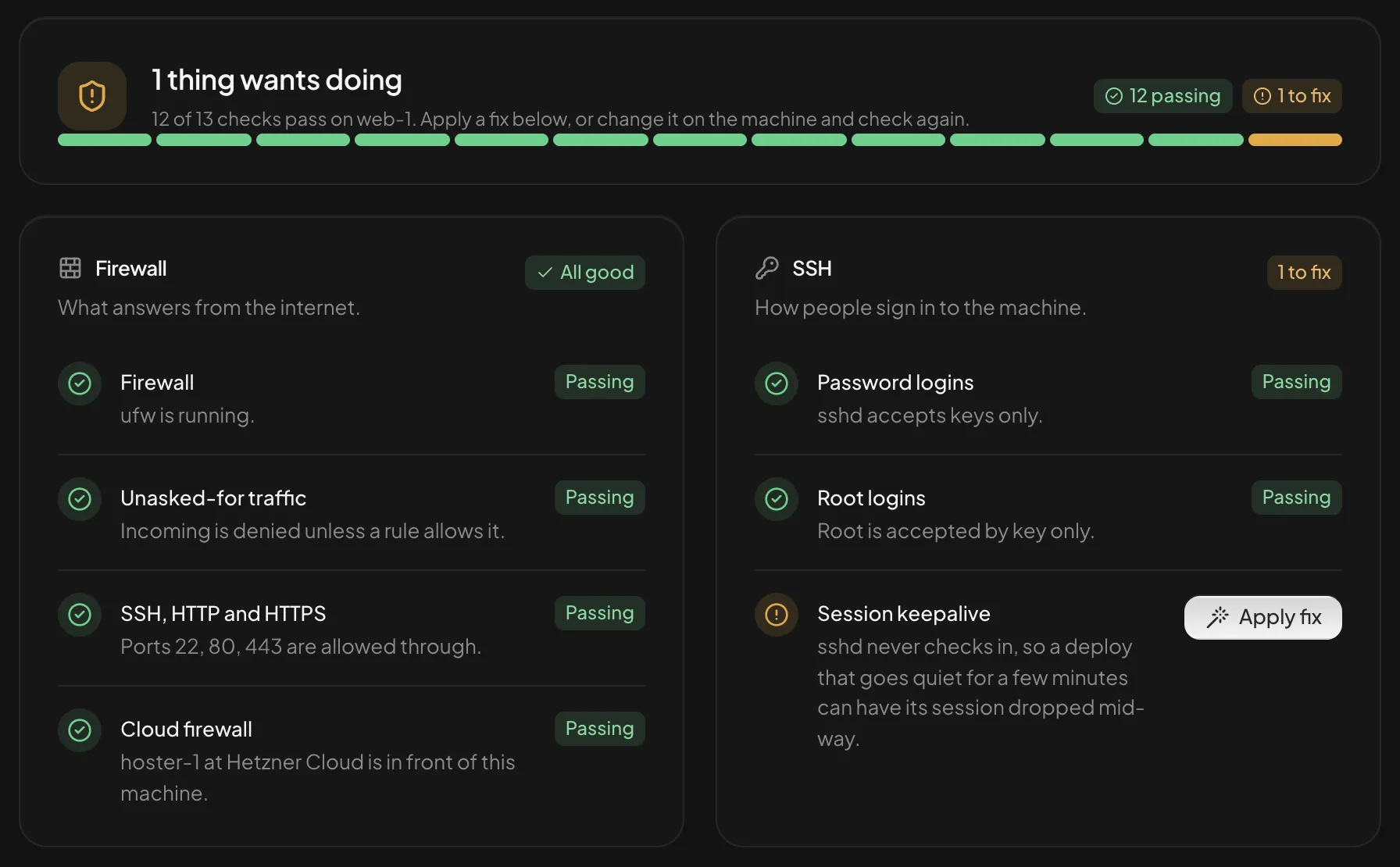
- Every check, in one round tripFirewall, default-deny, open ports, SSH passwords, root logins, fail2ban, automatic updates, swap. Each one ok, wants doing, or honestly unreadable.
- One fix per runEach fix is its own logged, cancellable job, so you can see what changed and stop it halfway.
- The cloud firewall tooDocker publishes past the machine's own firewall, so the one at the provider is the one that holds. Per-server rules live there.
- Two keys, and neither is yoursA control key for reaching machines and a deploy key for the runner, generated here and rotatable, so no team shares a personal key.
Security
What is known to be broken on your machines, and who may sign in to change them.
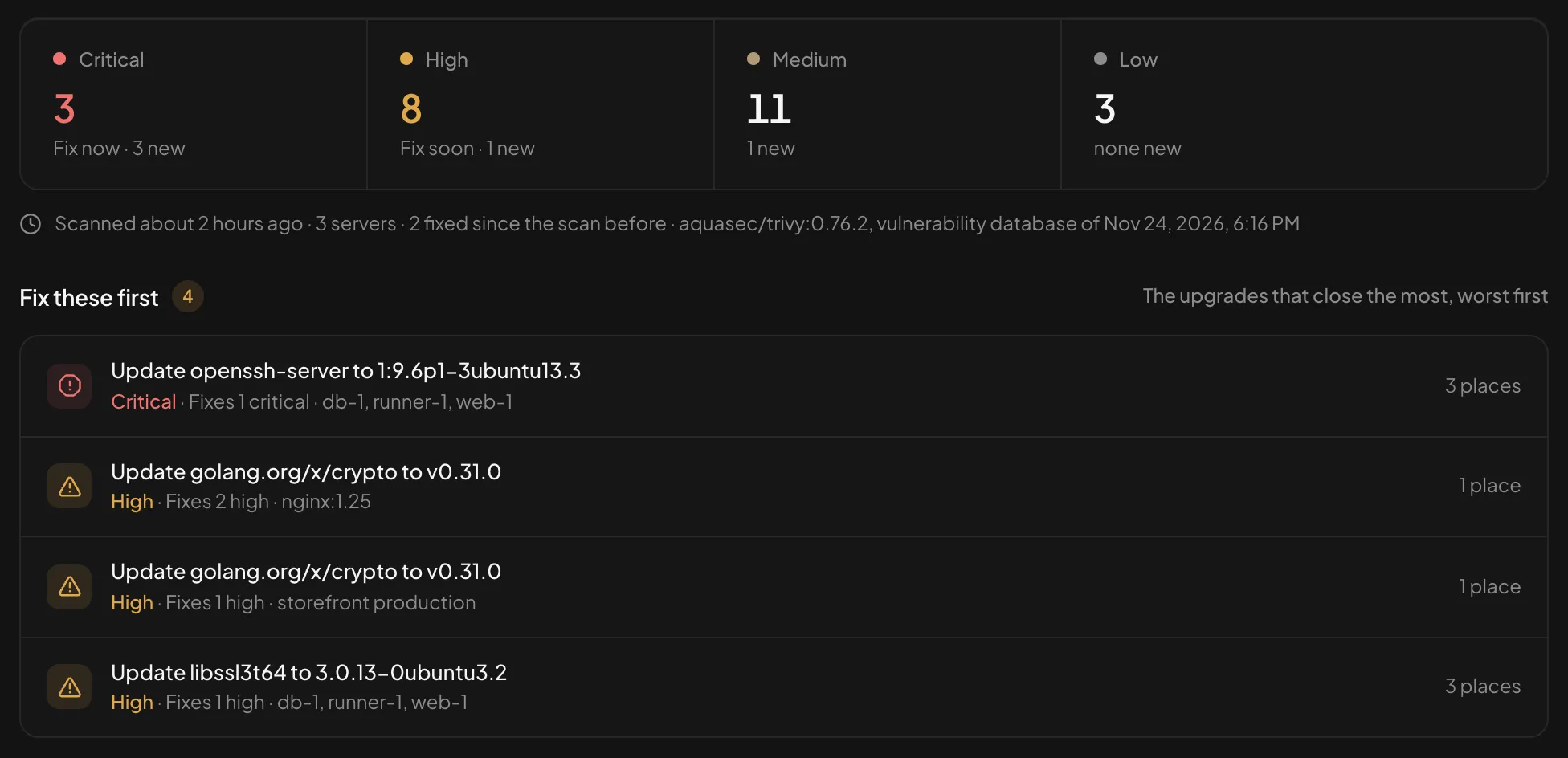
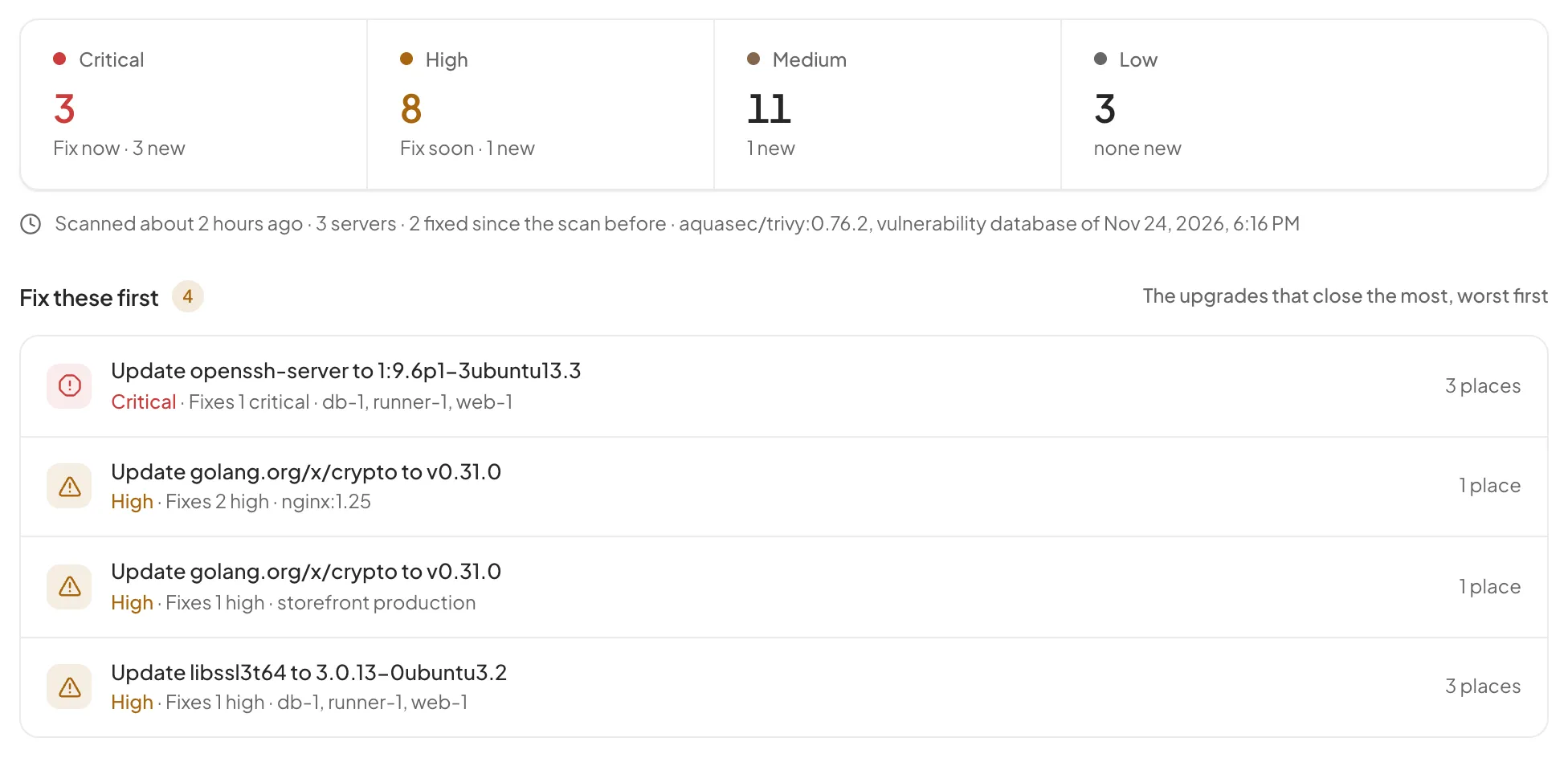
- A weekly scan of every serverTrivy, pinned by digest, against each server's OS packages and every running image, plus each server's settings, ports open to the internet, certificates and outdated template apps.
- What is new, and what you fixedEvery scan is compared with the one before. The upgrades that close the most come first, and new critical or high findings send an alert.
- Two-factor sign-in, for everyoneAn authenticator code at every sign-in, recovery codes, and a 15-minute lock after five wrong codes. Deleting an environment asks for the code again.
- Backups encrypted with your own keyNew backup copies are encrypted with your team's key before they reach your bucket. Admins can read the key back, and plain rclone can decrypt a copy without us.
Deploying
Standard Kamal, run from a machine kept apart from the ones serving your app.
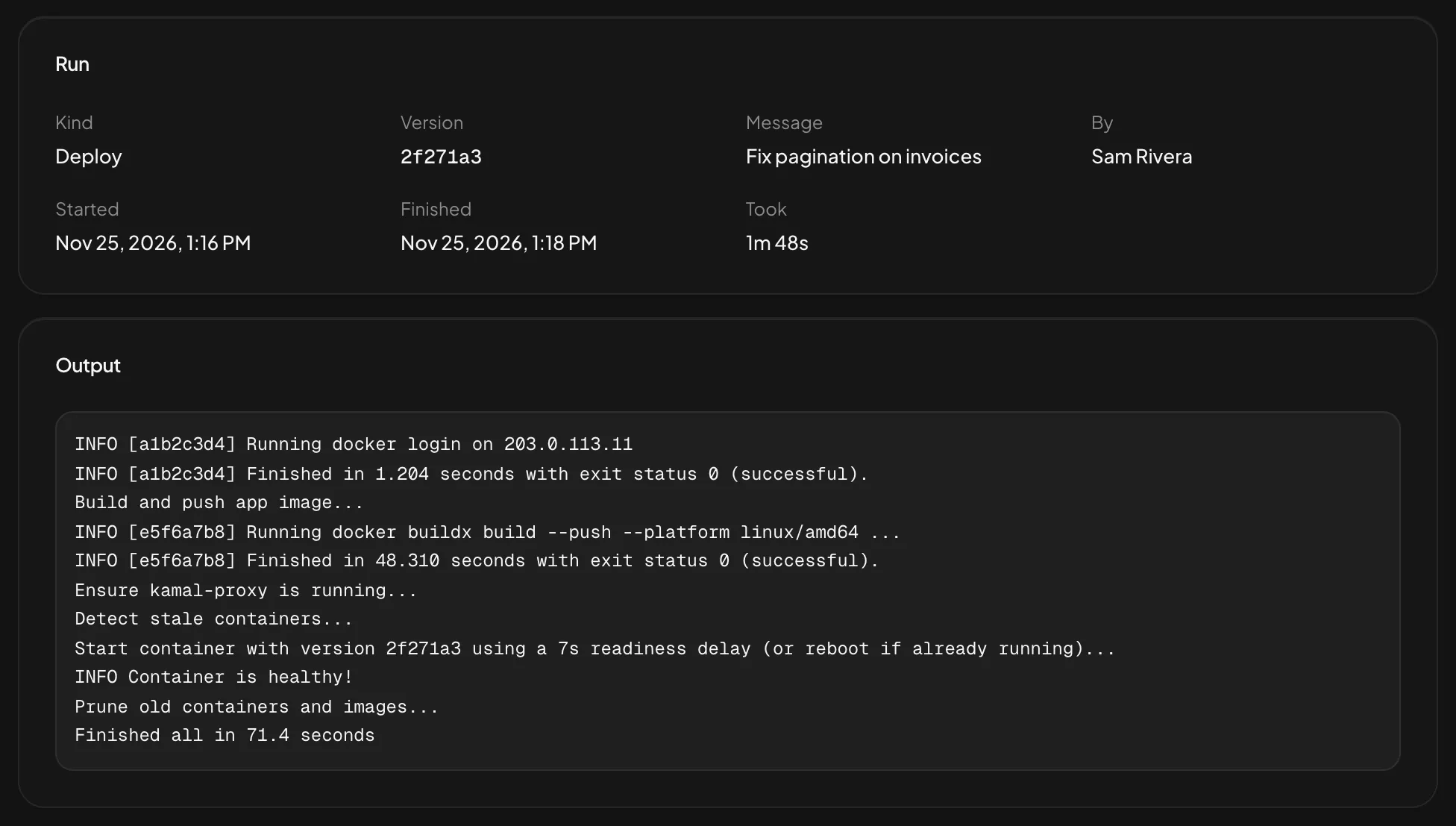
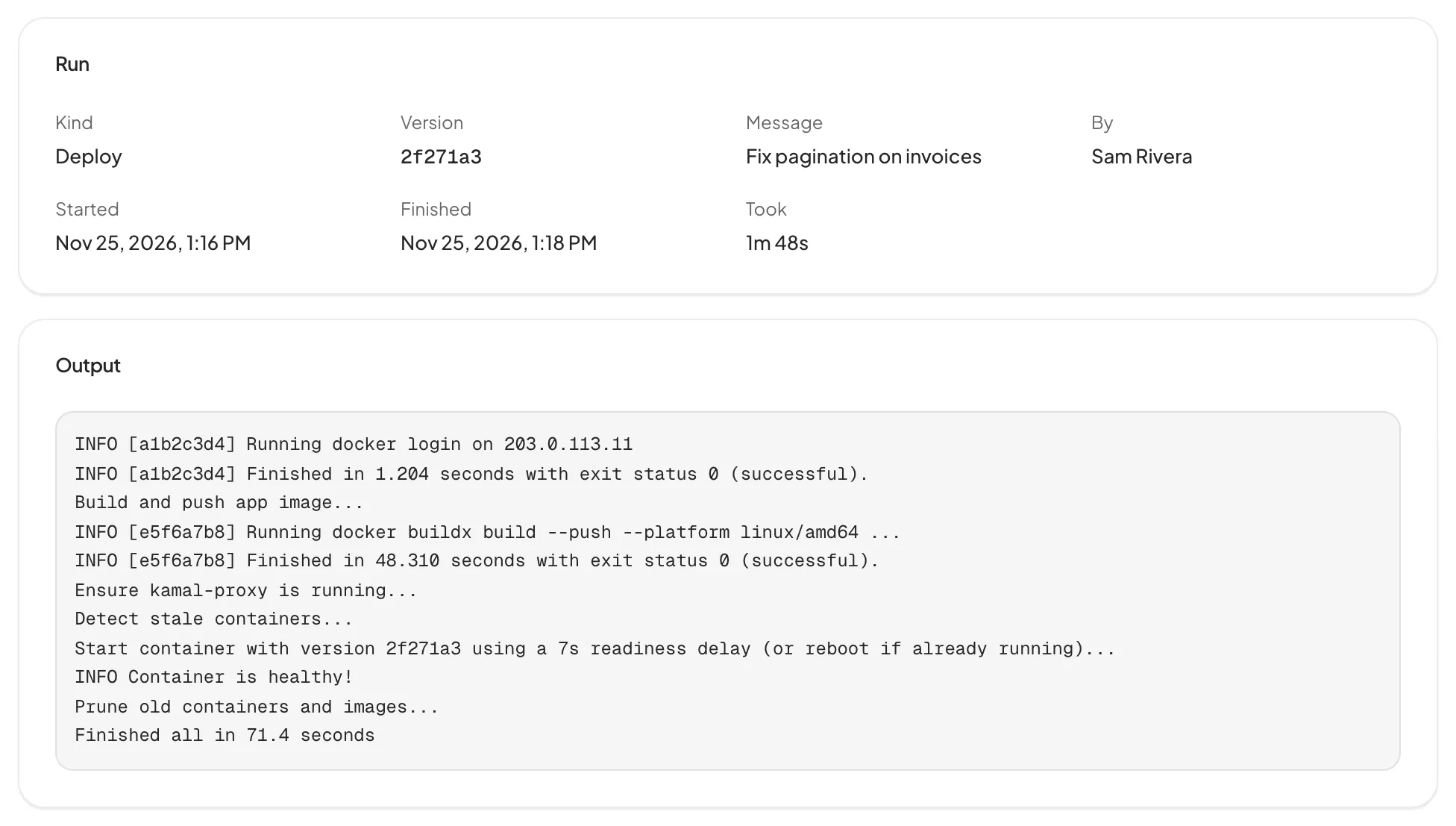
- A destination file, not an editYour repository's deploy.yml is never touched. A destination file and a secrets file are written beside it on the runner.
- Several machines per roleReal Kamal roles — web, job, whatever you named — each holding as many machines as it needs, with mixed architectures understood.
- Push or tag to deployFiltered by branch, tag and changed paths, and off by default so a coincidentally-named branch never ships to production.
- Rollback, maintenance, stuck locksGo back to a release Kamal still has, put the proxy into maintenance with your own message, or release a lock a dead run left behind.
- Restarting mid-deploy loses nothingRuns are detached on the runner. A sweep reattaches and settles the record on what actually happened.
Data
Databases, the volumes under them, and getting both somewhere else.
- Postgres, MySQL, Redis and ValkeyAdded as Kamal accessories with generated passwords, a connection URL injected as a secret, and a console for each engine.
- Volumes found, not typedMounts are discovered off the machine and picked from a list, then archived with a pinned image so your app's language is irrelevant.
- Backups to buckets you ownScheduled dumps and archives to one or more S3-compatible buckets, with retention, and an alert when one is overdue rather than merely failed.
- Move an app to another serverA template app's data is copied across while it keeps running, then a short pause for the last changes, and it starts on the new server with its domain following.
- Restores, and a download that skips usRestore from the copy least likely to have gone with the server, or download one, decrypted as it streams through your own runner.
Operating
The week after the deploy: what it is doing, what it costs, and who to tell.
- Live logs and a shellContainer output streamed as it happens — the app, an accessory, or kamal-proxy itself — and an interactive shell inside the container for admins.
- Scheduled tasksA named command run inside the running container on a schedule, with its history, its output, and an alert when one quietly stops working.
- Domains, TLS and the reason it failedCertificates issued and renewed, DNS checked against what actually resolves, and the certificate served read back from outside — CAA records included.
- Ports the proxy cannot frontRaw TCP and UDP published on the machines themselves, for mail, game servers and anything else that is not HTTP.
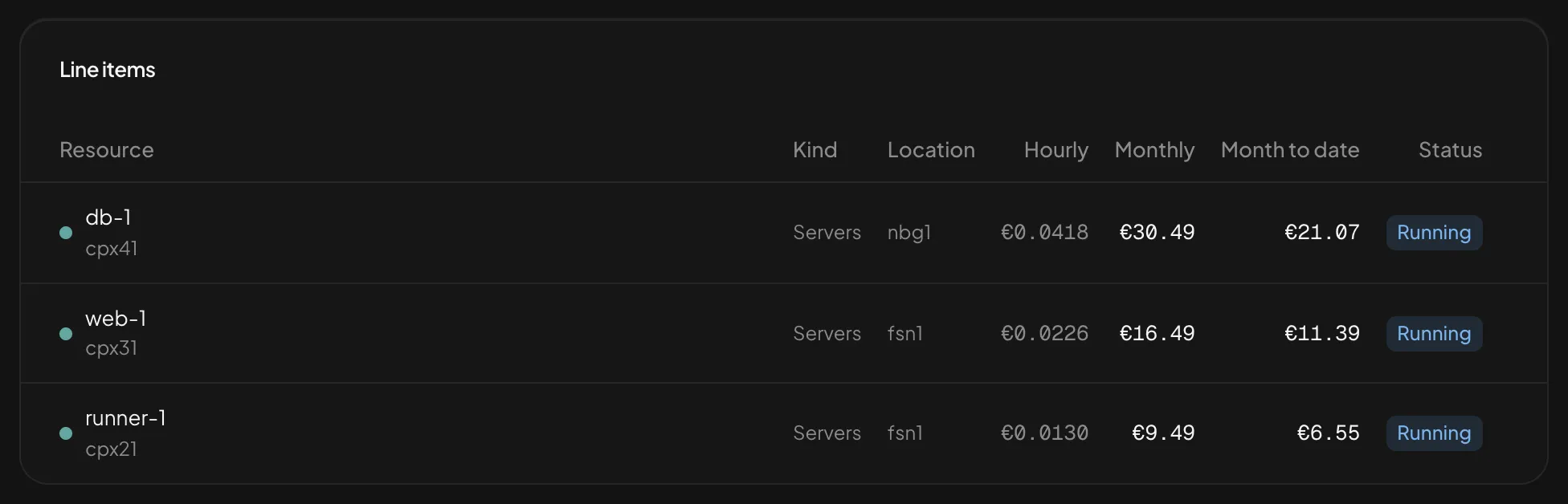
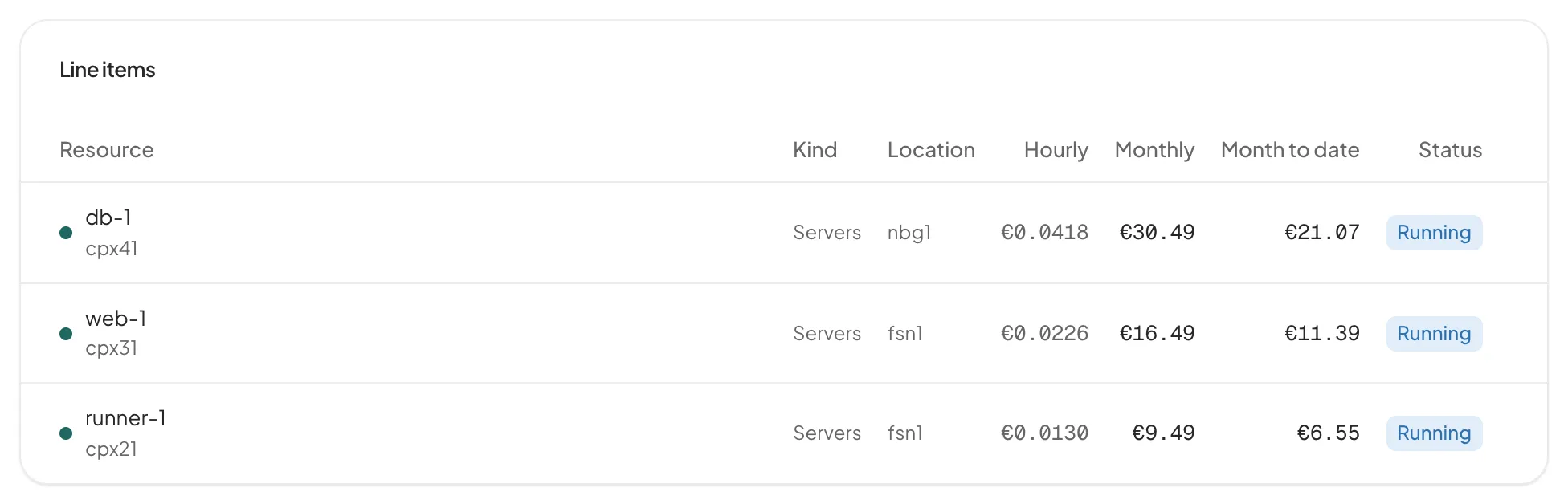
- What it costs, per machineEvery billable thing priced at the provider's own list rate, with idle spend and traffic overage called out. Never resold, never through us.
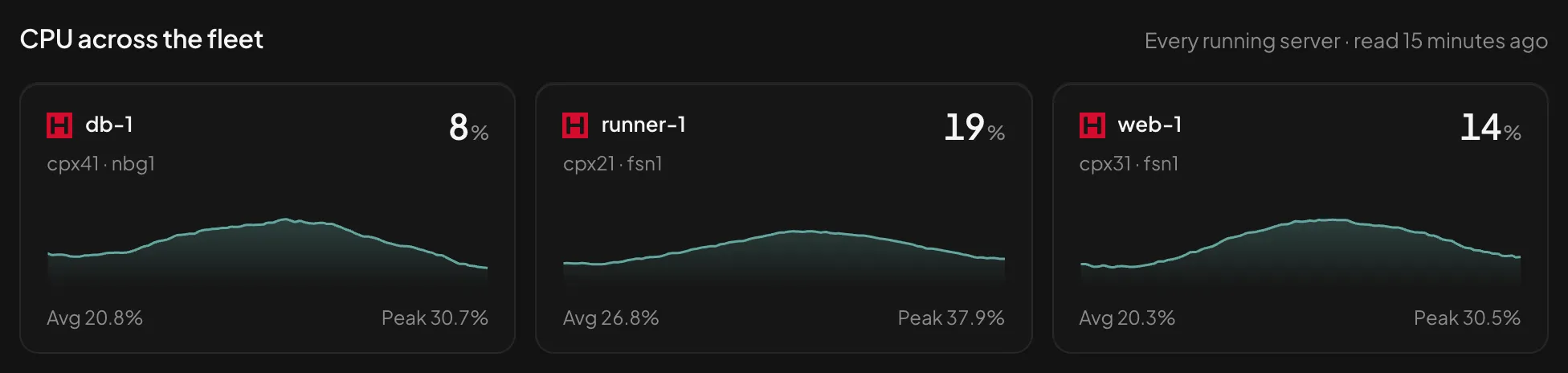
- How it is behavingDeploy counts, success rate and average time, and CPU, disk and network for each machine.
- Told once, where you read thingsEmail, Slack, Discord or your own webhook, subscribed per event, with a sweep for the alerts nothing raises because nothing happened.
Automation and people
The same actions, through whichever door suits — and a gate in front of them.
- One surface, four front doorsEvery action in the browser is also a JSON endpoint, a CLI command and an MCP tool, generated from the controllers themselves so they cannot drift apart.
- An MCP server for your infrastructureTools filtered by the caller's own role, and a preview an agent must confirm before anything expensive, irreversible or traffic-affecting runs.
- A CLI that never needs updatingEvery tool is already a command. It follows a deploy to completion, returns a different exit code per kind of failure, and bridges MCP over stdio.
- Read-only when it only needs to lookA sign-in can be read-only: it reads everything a person could and changes nothing, and it is never handed a secret. There is no install-wide token; a script signs in as a person.
- People, roles and invitationsOwner, admin and member, invited by name, each acting as themselves — so the record of who did what means something.
- Off-the-shelf appsFive templates install as ordinary apps, with their image pinned and their accessories, volumes and secrets already set up.
And where it stops.
No Docker Compose, no preview environments, and configuration history — who changed a secret or a role — is not recorded yet. Private networking between hosts, managed load balancers and accessories reachable from more than one machine are all still open.
See the comparisonStart with staging.
Connect a cloud account, build one server, and watch the hardening panel read it back to you.
$29 a month. Cancel any time.